


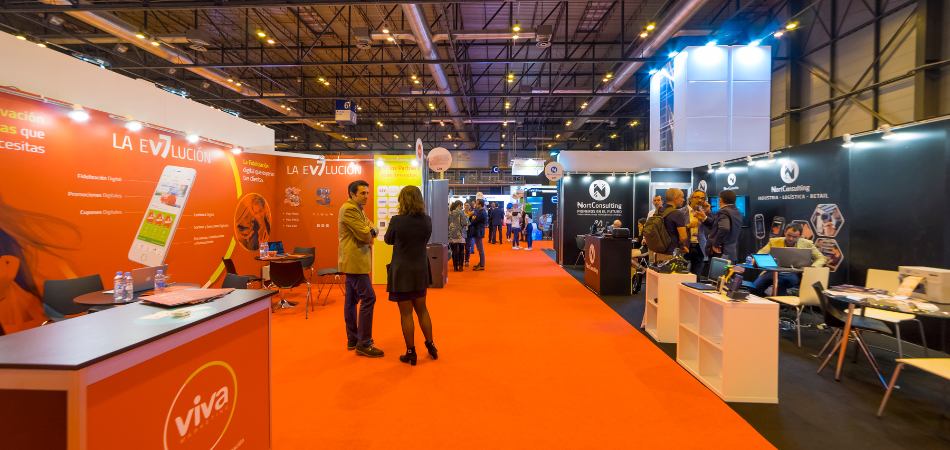
There are many trade fairs in the sector, sometimes we might think too many, and they are certainly concentrated in the same periods: above all in spring and at the beginning of autumn.
But we know how to prepare for them and how to reach a customer who is receiving hundreds of offers and promotions at the same time. We are in a market that saturates the members of buying groups and cooperatives with information, promotions, offers and new products. It is hard to handle.
We have to plan each year well. Note which fairs there are and what we did this year, so we keep it in mind for the following ones. Good planning is vital for knowing when to schedule product launches, promotions and point-of-sale actions.
It makes no sense to bring products to market a week after the main fair in the sector. Or for the launch of a new range to be so tight on time that it cannot be presented properly before the fair everyone is going to.
The calendar for launching promotions or ranges cannot be improvised or taken lightly. It has to be agreed with sales and with commercial management for it to be effective.
We have to be aware that timing is vital and that having the complete package ready for a product or range is essential: catalogues, price lists, promotions. We cannot afford mistakes in this process, because they damage the company’s credibility.
We cannot launch a product for Christmas a few days before the campaign starts. Sales of seasonal products have to be planned well in advance. Arriving very late is like not arriving at all.
Not knowing how the market works and not being aware of its timing is a very serious mistake. It is something a company cannot allow in marketing or in commercial management. It condemns a product to failure before it even reaches the market.
Fairs should be the launch pad, the place to present new products. We have to stage them properly. You cannot have people at your stand saying that dreaded phrase, “they have brought the same as every year”. That is throwing away money, brand image and prestige.
You can even get it wrong by doing something different. But those who do not take decisions or risks do not succeed. Those who always do the same thing make no mistakes, but they do not evolve either, and they achieve nothing new.
Being predictable is being Out of the market. Being the ones who propose new, different things that can attract the consumer is being In.
A fair is a challenge. It should motivate us and make us imagine what kind of stand, what kind of presentation, would make us want to buy if we were the customer.
“There is always time to fall asleep to boring proposals.”
Launching the same offer to everyone, the same one as every year, will get the dull response that matches the little time invested in it. Let us not be simplistic, and let us not refuse to invest in the things we want to deliver great results.
Promotions cannot be the same every year, with autumn’s being spring’s with the dates changed. All we will win is the overdue shelf order that has been sitting in the drawer for two months.
Routine and complacency are the worst enemies of sales and marketing.
There is an added problem to bear in mind. Because the fairs all fall within a few weeks, sales networks have to cover many customers in a few days, sometimes across very large areas. That complicates absolutely everything.
If you do not contribute something in this sector, you are more than dispensable. If you do not bring something new and different, you become the supplier whose order gets placed if there is time, and if not, later.
Sometimes we say, “the fair did not go well”. We should be asking instead, “what did we do to make the fair go well?”
Were the offers the right ones, or the same as always?
Did we work with enough time, with the notice the market requires?
Did we give importance to the new products, or did they arrive too late for that?
Did we listen to the sales network, so that the offers were better?
Otherwise we lose business opportunities, and the chance to be the ones who set the pace ahead of our competitors.
There are many ways to create interest and generate business differently.
For example, combining spring and autumn offers, adding up volumes on a sliding scale to obtain larger orders.
Offering extra discounts for orders scheduled over the coming months: you gain volume, you block the competition and you know your product will be better placed.
Offering an incentive for your product to have a preferential position in the shop, with a competition for the best displays, or perhaps a leisure trip for those who take part.
Why not post photos of the best shelves and gondola ends on our website and social media, let consumers vote, and award prizes on that basis?
There are many ways to be creative. Give the sales network an incentive not only for volume, but also for new customers, for introducing new products and for opening new chains.
You have to want to commit to a different future, to things that create added value for the company, the market and the customer. Not doing so is not wanting to lead in this world of sales.
It means having ideas and deciding to be a little daring, a little unusual, in order to gain market share.
It means knowing that you might get it wrong, but that it will be because you took a decision.
Those who never take decisions never make mistakes, but they never move forward either.
We know how to advise you, and we know it is fun to create something nobody expects. We know the market, the customer, and what can be different and creative.
Ask us. We want to hear your ideas and your proposals. Together we will certainly be better.
Compartir este artículo: